This article is about a fictional weapon from the Cosmic Era timeline of the Gundam anime metaseries.
The  ZGMF-X20A Strike Freedom is a mobile suit which is mainly shown in the
  anime TV series Mobile Suit Gundam SEED Destiny. First shown deployed in episode 39 (called PHASE 39 in the anime), it is piloted by one of the main characters of the series, Kira Yamato, as part of the Three Ships Alliance and Orb Union's 2nd Space Fleet. Despite its designs bears striking similarity to its predecessor, ZGMF-X10A Freedom Gundam, this mobile suit can be easily distinguished by its golden joints and detachable wings.
In real world
Strike Freedom Gundam is arguably the most popular mobile suit from the Mobile Suit Gundam Seed Destiny anime series.[1] As many of protagonists' mobile suits of Gundam metaseries, at least in Japan and its surrounding countries (East and Southeast Asia), Strike Freedom enjoys significant popularity among other mobile suits. Strike Freedom is often featured in Japanese Newtype Magazine and available in a wide range of model kits and stand off display.
Part of Strike Freedom's popularity can be traced back to Bandai Action Kits Asia Cup 2005,[2] which divided into two categories (which are Open Category and Junior Category), the world winner of the Junior Category (謳小楓, from mainland China), who used the Strike Freedom kit (in Super Deformed form). At least one other regional Junior Category winner (William Frederick Soehaili, from Indonesia) also used Strike Freedom Model Kit. Further, there are two other regional winners using model kit from Cosmic Era universe, both from Singapore. The Open Category winner used Destroy GFAS-X1 Destroy, while the Junior category used ZGMF-X42S Destiny model kit.
Design
Designed by Kunio Okawara, its design bears striking similarities to the ZGMF-X10A Freedom Gundam. Although, upon in-depth examination of both designs, there are various differences, particularly on the head and wing sections.
Strike Freedom lacks its predecessor's wing-mounted beam cannons, replaced by multiple detachable remote armaments known as DRAGOONs (an acronym for Disconnected Rapid Armament Group Overlook Operation Network). It still retains the twin hip-mounted gun, though they are now capable of swiveling back in order to create space for mounting two rifles, which can be combined into a longer weapon. There is also an additional large high-powered cannon mounted on its abdomen. However, the most significant difference is probably the existence of golden colored joints in various parts of Strike Freedom.
As many mobile suits in Mobile Suit Gundam SEED and Mobile Suit Gundam SEED Destiny, Strike Freedom's features resemble famous systems from mobile suits of the other previous Gundam metaseries.
The DRAGOONs are similar to funnels and bits of Universal Century's universe. The beam shields used were first seen on the Gundam F91, although chronologically in Universal Century universe, the Gundam F90 VSBR Type was the first UC Mobile Suit to use one. The visual effect of Strike Freedom wings is similar to the beam wings utilized by the Mobile Suit Victory Gundam's Victory 2 Gundam. There are many more similarities to other famous features of the other previous Gundam metaseries
Name Origin
Originally, the name of the mobile suit was planned to be "Super Freedom". Mitsuo Fukuda, the director of the Gundam Seed Destiny, named the "Super Asurada" to the succession machine of the "Asurada" in his previous work, Future GPX Cyber Formula. Therefore it was not considered unnatural when announced on the official website, the name of the mobile suit was planned to be "Super Freedom". However the name was changed to "Strike Freedom" in a short time after the announcement. Allegedly, this was because the name would remind Japanese people of Super Free, a Japanese notorious rape group, as was criticized at that time, by some blogs.
Model Kits
The Strike Freedom is available in a wide range of model kits, and rivals its predecessor, the Freedom, in the number of model kits based on it that are produced by Bandai. In late December 2006, Bandai simultaneously released two Master Grade class Strike Freedom model kits. Aside from normal Master Grade, Bandai also made a Master Grade "Full Burst Mode" version which notably replaced the normal version's gold parts made from color-injection ABS plastic with reflective gold coated plastic. Aside the shinier replacement of the gold parts, the special version includes Dragoon effect parts, a special clear blue base stand, and a clear illustration poster of Strike Freedom vs Destiny. A Limited Edition Clear Master Grade version was released at 2007 Gundam Plamodel EXPO which had translucent armor pieces but with the same gold inner frame. In late September of 2008, Bandai also released the Master Grade "Extra Finish" version. This version has a metallic finish for all the parts. Strike Freedom is the first mobile suit from Mobile Suit Gundam SEED Destiny to have a Master Grade model.
In Cosmic Era universe
The ZGMF-X20A Strike Freedom along with its companion and counterpart mobile suit unit, the ZGMF-X19A Infinite Justice, is one of the most advanced mobile suits in the Cosmic Era during the Second Bloody Valentine War (the main plot of Mobile Suit Gundam SEED Destiny). They are often compared to ZAFT's ZGMF-X42S Destiny and ZGMF-X666S Legend, also with lesser degree with the Orb Union's ORB-01 Akatsuki.
Despite its name being Strike Freedom, it is commonly referred to as Freedom by both friend and foe. It is only referred to by its full name twice during the TV series Mobile Suit Gundam SEED Destiny, once by Kira and once by Lacus, both in its debut in episode 39.
The Strike Freedom is also Kira's only unit that survived through the series so far, in fact, it was never damaged. The GAT-X105 Strike and ZGMF-X10A Freedom were both destroyed. The Strike was destroyed by Athrun Zala in the GAT-X303 Aegis, (and the rebuilt Strike was then destroyed once more when Mu La Flaga used it to save the Archangel from the Dominion's positron cannon). The Freedom was severely damaged by Rau Le Creuset in the ZGMF-X13A Providence and the subsequent misfire of GENESIS at the end of Gundam SEED, and then the Freedom was repaired and used again in Gundam SEED Destiny and was later destroyed by Shinn Asuka in the ZGMF-X56S Impulse .
Design
The Strike Freedom is armed with new advanced weaponry, giving it several times the combat capability of the original Freedom thanks to advancement in technology which takes place in the roughly two year gap, chronogically, that separates their constructions.
Apart from the head-mounted CIWS and "Super Lacerta" beam sabers, the Strike Freedom is equipped with a pair of "Xiphias 3" rail cannons on its hips, a smaller and more refined version of its predecessor, and an abdomen-mounted "Callidus" multi-phase beam cannon. It also carries two high energy beam rifles that can combine into a longer, more powerful weapon similar to the GAT-X103 Buster's ability to combine its main armaments into a more powerful weapon. These rifles can be stored on the hips by having the rail cannons swivel to the rear of the suit. For defensive purposes the Strike Freedom is equipped with beam shield generators which are mounted on its forearms.
Much like the suit it’s based on, the most distinctive feature of the Strike Freedom is the set of wings housed on its backpack/thruster array. These wings give the Strike Freedom an updated HiMAT (High Maneuver Aerial Tactical) mode akin to the Freedom. In addition, it has the "Voiture Lumière" booster engine on its "wing", first employed by GSX-401FW Stargazer and Delta Astray. Unlike its predecessor, the wings are part of the Strike Freedom's weaponry as the blue sections of the eight wing components can detach and operate as remote "Super" DRAGOON units, each mounting one beam assault cannon.
Like its predecessor, the unit is equipped with hardpoints to dock with the METEOR (Mobile suit Embedded Tactical EnfORcer) weapon system. The Strike Freedom utilises an updated version of the Generation Unsubdued Nuclear Drive Assault Module complex operating system.
It is also interesting that when Strike Freedom was shown in the third opening animation of Gundam SEED Destiny, its head crest displayed the words "Liberta Modifica", which is "Modified Freedom" in Latin. Starting with episode 39 the words were changed to read "X-20A VENTI", which is "Twenty" in Italian, a reference to the Strike Freedom's model number.
Construction
The ZGMF-X20A Strike Freedom currently has no clear fictional "historical" background, as various official sources have some contradicting statements. However, the sources at least agree that Strike Freedom was completed in secret by Terminal or the Clyne Faction. It is also agreed that the mobile suit is based on the earlier ZGMF-X10A Freedom and is powered by the Ultracompact Hyper-Deuterion Nuclear Fission Reactor.
In the Master Grade model kit manual,[4] Strike Freedom was stated as originally under the production of ZAFT as a newer version of the ZGMF-X10A Freedom. In the manual, this mobile suit was planned by ZAFT to be mass-produced for achieving victory for any war. Further in the manual, Strike Freedom's maiden flight was slated for after the Armory One Incident (The incident shown in early episodes of Mobile Suit Gundam SEED Destiny). Later, during the final stages of its development, Terminal stole the mobile suit and modified it for Kira Yamato, resulting it to become a highly powerful mobile suit. It explained the "ZGMF" model number, which is common for ZAFT's mobile suits. Shigeru Morita's declarations over his will to build links between Strike Freedom, Destiny and Stargazer, that the first two field a propulsion system derived from Stargazer's "Voiture Lumière" interplanetary propulsion system, also confirmed by this manual.
From the High Grade model kit manual,[5] Strike Freedom was completed by the former Clyne Faction led by Lacus Clyne. The manual states that the Strike Freedom was created by stealing data from the next-generation Second Stage series that was under development by ZAFT and combined with data from the Freedom which was restored in Orb after the previous war, the Bloody Valentine War (the main plot of the TV series Mobile Suit Gundam SEED). Further stated, as this hybrid machine is a further power-up of the Freedom, which already surpassed ordinary mobile suits, no normal human can operate it. The manual also explained the Strike Freedom name, that when Lacus Clyne finally approved the decision of its developers and gave it to Kira Yamato, she gives it the names of the Strike and Freedom that had previously fought alongside him as if offering up a prayer.
Despite the intention of ZAFT to mass produce this Mobile Suit, as in the MG manual, only one mobile suit was known to be completed and deployed in Cosmic Era universe, shown in Mobile Suit Gundam SEED Destiny.
In service
The Strike Freedom made its debut on CE 74, shown in 39th episode of TV series Mobile Suit Gundam SEED Destiny,[6] when Kira boards the Eternal in the MBF-P02+AQM/E-X01 Aile Strike Rouge and then launches in the Strike Freedom to defend the ship from a ZAFT attack force. Kira with the Strike Freedom successfully disabled 25 ZAKUs and GOUFs in total, within two minutes, and then also disabled three Nazca class destroyers. This decisively turns tide of battle and ends the ZAFT attacks.
When it arrives on Earth at episode 42 during ZAFT's Invasion of Orb,[7] it immediately confronts the ZGMF-X42S Destiny, piloted by Shinn Asuka, saving the ORB-01 Akatsuki (piloted by Kira's twin sister, Cagalli Yula Athha) by destroying the two beam boomerangs about to slice it apart. The initial clash between the two suits proved somewhat inconclusive as neither unit was able to cause any major damage to the other, let alone gain the upper hand. The Destiny is then ordered to retreat by Rey Za Burrel to rearm and resupply (Note also Destiny's energy is also depleted on TV series episode, while the OVA does not display the energy depletion event) .
When the Destiny returns in episode 43,[8] it is accompanied by Rey Za Burrel in the ZGMF-X666S Legend. The Strike Freedom gains an opening and takes aim at a disoriented and vulnerable Destiny, preparing to fire. The Legend saves it at the last minute. Together both units manage to give the Destiny an opportunity to heavily damage the Strike Freedom. Athrun Zala in the ZGMF-X19A Infinite Justice arrives on the scene at that moment saving Kira however, stopping the attack before either side manages to damage the other. For the remainder of this battle, which is not long, the Strike Freedom engages the Legend in which neither gains an advantage or damages the other until they are nearing the end of the battle.
The Strike Freedom plays a pivotal role in ending the Second Bloody Valentine War soon afterwards. During episode 49 of the TV series Mobile Suit Gundam SEED Destiny,[9] Strike Freedom and the Infinite Justice, both equipped with the METEOR mobile weapons platform, destroy an important relay station that was to be used by the Requiem tactical cannon, which was under ZAFT control. After accomplishing this goal, in episode 50[10] the Strike Freedom, without METEOR, engages the Destiny once again, this time able to fully utilize its DRAGOONs and thrusters, which prove to be an important addition to the battle against Shinn, who had not activated his SEED factor. Kira is able to once again disable Destiny before the Legend saves it again. It than engages the Legend and heavily damages it. Later in the same episode, the suit docks with the METEOR once more and then heads to the mobile fortress Messiah and heavily damages it, which leads to its destruction and the subsequent end of the Second Bloody Valentine War.
 นิทานเรื่องแจ๊คผู้ฆ่ายักษ์(Jack and the Bean stalk) ลิฟต์อวกาศในนิทานsource:http://www.eventidearts.org/images/jack.JPG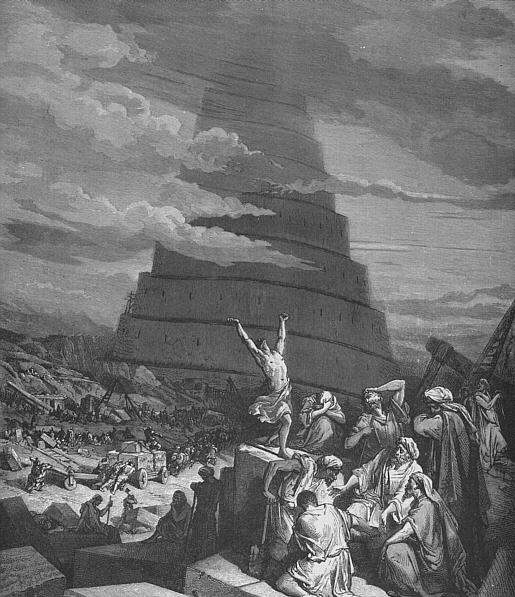
 ดาวเทียมกำเนิดพลังงานแสงอาทิตย์ซึ่งทำหน้าที่ผลิตไฟฟ้า แล้วส่งพลังงานไฟฟ้าลงมาผ่านทางลิฟต์อวกาศ เพื่อป้อนให้กับมนุษย์บนโลก
 แล้วหอคอยการินกับวงพระเจ้าก็ต้องอยู่ตรงศูนย์สูตรด้วย